
Core Features
The SEO Markup gcms Outputs by Default: Canonical, hreflang, Sitemap and JSON-LD
Server rendering, canonical, hreflang, sitemap, RSS and JSON-LD are generated by default. You write; gcms outputs the markup.
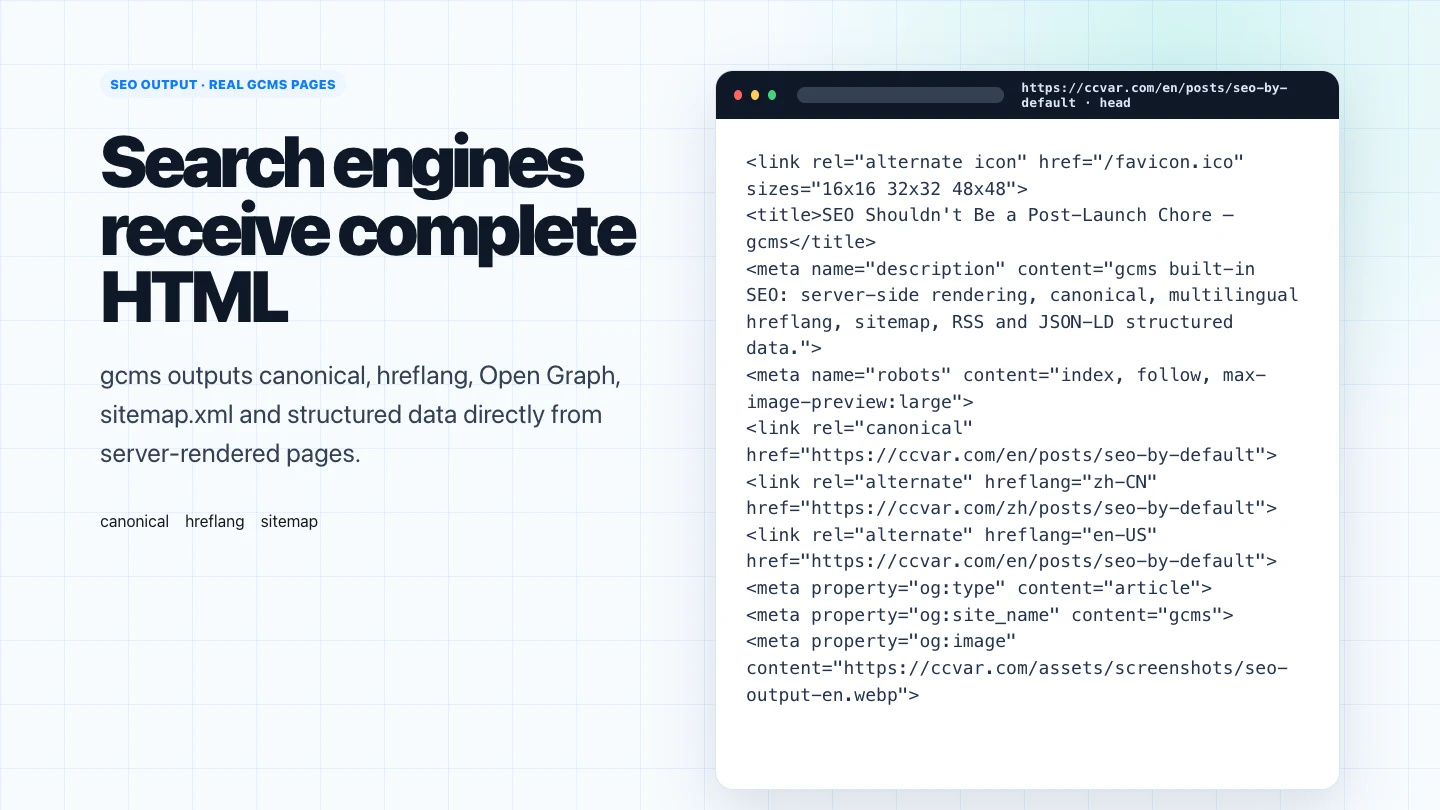
Many sites treat SEO as homework for after launch. gcms outputs the core markup by default: you write the content, and the technical tags are already in place.
Every page is already-written HTML
The whole site is server-rendered, returning a complete page. Crawlers get the title, body and structured data without running any JavaScript, and above-the-fold content lands in the first response packet — friendly to Core Web Vitals.
Every tag you need, none missing
- Self-referencing canonical, so search engines know each page's preferred URL;
- Multilingual hreflang (with
x-default); - Open Graph social cards;
- sitemap.xml and per-language RSS;
BlogPosting/BreadcrumbListJSON-LD that search engines can use for rich results.
Generated per page, and easy to check
Everything is generated per page to help search engines understand your content. Whether a page gets indexed or shows rich results is the search engine's call. To check a post's structured data yourself, run its URL through Google's Rich Results Test. If you serve the front end from Cloudflare, check after the first sync that canonical, sitemap and RSS URLs all use your production domain.
What to check before publishing
Automation does not replace editorial care. Each post still deserves a clear title, excerpt, meta description, keywords, slug and image alt text. The title earns the click, the description shapes the search result, the slug keeps the URL readable, and the cover makes sharing trustworthy. gcms handles the technical base; you make the content convincing.